This site has limited support for your browser. We recommend switching to Edge, Chrome, Safari, or Firefox.

Free surprise samples with every order!

Free shipping on orders over €49,9.

Hair at the beach: how to protect it from sun and salt. The summer routine that starts from the scalp.

Capelli al mare: come proteggerli da sole e salsedine. La routine estiva che parte dal cuoio capelluto.

8-minute read

There's a moment every summer when you realize it: the hair that was shiny and soft in June, by the end of July is drier, frizzier, a bit dull. There are many reasons: sun, salt, wind, sand, a few dips in the pool – all together, they put your hair to the test every day. But don't panic: it's not about keeping your hair under a glass dome, but about letting it enjoy the summer while staying healthy.

The good news? You don't have to wait until September to fix it with a mask or a good treatment. What makes the difference is what you do now, day after day, starting from a point that is often forgotten: the scalp. Strong hair always comes from a healthy root, and if that gets stressed, everything else suffers.

In this article, we'll look at what really happens to your hair at the beach, how to protect it before, during, and after the beach, and how to build a small routine that will last you all season, starting right from the scalp.

← Older Post Newer Post →

Hair protection at the beach: here’s why you need it

But what exactly happens under the sun? UV rays break down keratin and cause color to fade, even if it was just applied. 

Saltwater dehydrates the hair and opens the cuticles, leaving it feeling rougher to the touch. 

If you add a few dips in the pool, chlorine does the same thing to treated or colored hair. 

And then there's wind and sand, which cause friction and leave the hair full of knots. 

All of this can lead to dry, frizzy, damaged hair, split ends, and faded color.

And the scalp? It suffers the same damage, you just see it less. 

Taking preventive measures during the summer, therefore, means you won't have to repair everything from scratch in September

The most common misunderstanding about this theory, the one that leads most people to give up on nude after a few tries, is that natural means invisible. A natural-effect lip look created with a little care, on the other hand, makes quite an impact: it refreshes the complexion, restores volume if needed, or if you want it, and lasts all day without the need for touch-ups. And the difference between a nude that works and one that doesn't? It's all down to the shade you choose and how you prepare your lips before applying makeup.

Scalp care: true summer care starts with the scalp

Healthy hair starts with a healthy scalp. Due to sweat, salt, sunscreen, sebum, more frequent washing, and tight hairstyles, the foundation is often under pressure in summer.

This is why scalp care is the first step, even if it's the last thing you think of. How can you tell if your scalp needs attention? The signs are clear: dryness, itching, irritation, excess sebum, and hair that looks dull at the roots even right after washing.

A small scalp care routine, repeated consistently, makes a difference:

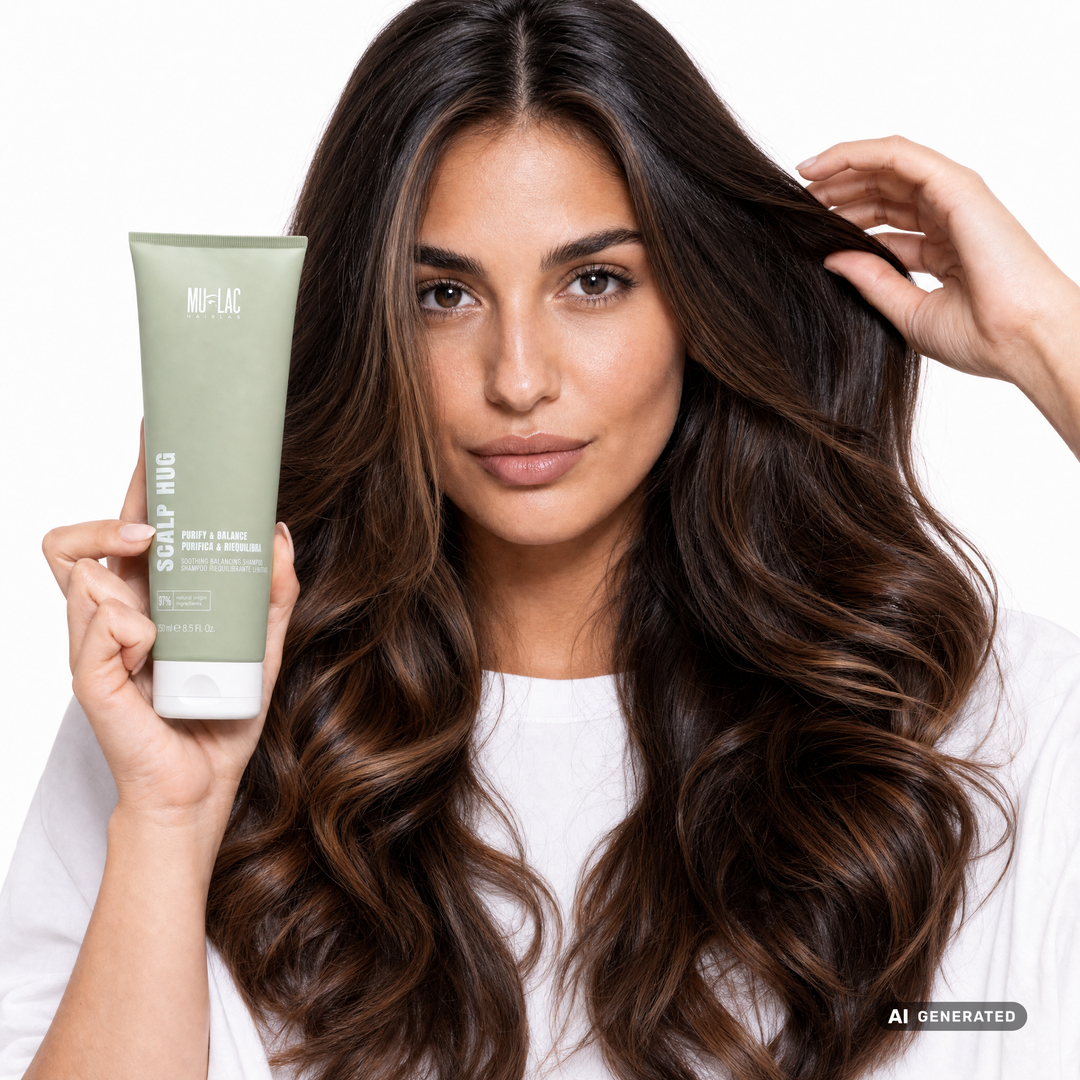
  1. Cleanse gently, with a shampoo designed for the scalp. Scalp Hug - Rebalancing and Soothing Shampoo is specifically designed for a dry, irritated, and sensitive scalp: it cleanses deeply without drying out the lengths and scalp, thanks to detoxifying scalpsol and strengthening rice vinegar. Massage it in well to stimulate microcirculation; it also has a soothing effect on itching.

  2. Treat the scalp with a dedicated mask to help rebalance and strengthen. Scalp Hug – the rebalancing scalp mask has purifying, moisturizing, and soothing properties, with Kaolin that gently exfoliates and strengthens the roots, while also reducing itching on sensitive scalps. Use it a couple of times a week, pairing it with a mask specifically designed for the lengths,

  3. Don't be too aggressive*. Water that isn't boiling, gentle products, gentle brushing, and alternating hairstyles with the right ponytails are your allies..

  4. Our tip: add a serum. Scalp Hug – the Strengthening Scalp Serum is a leave-on treatment with a fluid texture, designed to improve tensile strength and reduce hair fall during washing. Hydrolyzed soy proteins, rich in Peptides and Amino Acids, work together with Purslane and Brown Algae extracts for a stronger scalp and fuller-looking hair.

  5. Consistency is everything. Scalp care works if you can make it a habit, especially with frequent washing like in the summer.

So, how to treat a dry and irritated scalp? It all comes down to hydration and rebalancing formulas, especially when you wash your hair frequently. If you're looking for scalp care products specially designed for this, the Scalp Hug line is the perfect companion for your daily routine. . 

Now that the basics are covered, let's talk about how to protect the lengths of your hair too, which are the first to be affected by the sun and salt.

How to protect your hair at the beach: the practical mini-guide

When it comes to protecting your hair at the beach, all you need are a few right products and a few extra steps at key moments. Here is what to do at different times, before, during, and after a day at the beach.

Before: apply a leave-in protector to all lengths. A spray like Be Slick acts as a shield against the sun and salt: it is a smoothing styling spray that hydrates while protecting, and leaves hair softer and more manageable even after hours in the sun. If you are wondering what to put on your hair at the beach before lying down on the sand, the answer is here.

During: protect your head with a hat or bandana during the hottest hours, and if you have used a protector, reapply it after every swim.

After: always rinse with fresh water to remove salt and chlorine, pat dry without rubbing, and detangle with an anti-frizz detangler. The Frizzover 10 Hair Heat Protectant Spray is designed specifically for the knots the sea leaves behind: a spray that dissolves them without pulling and softens frizz, so combing doesn't turn into a series of micro-breakages.

In the evening: once or twice a week, a nourishing treatment helps replenish what the sun has taken away during the day. For example, the Creme’Berry 10 nourishing hair mask is an intensive, oil-rich treatment that penetrates deeply to nourish and hydrate even the most fragile hair.

In short, among the products to protect your hair at the beach, you don't need an arsenal: a good protector, a detangler, and a nourishing treatment already cover most of the work.

Curly, straight, wavy, or long hair? Every type gets its own protection for the sea!

Every head of hair reacts to the sea in its own way, so whatever your hair is like, there is no single right way to treat it: there is your way.

If you have curly hair by the sea, know that it is the thirstiest of all: it is best not to brush it when dry, to focus on hydration and definition, and to let it air-dry or use a diffuser. 

For the driest curls, using the Be Slick and Frizzover 10 sprays together really makes a difference, and they remain among the curly hair products by the sea that make your life easiest. The same goes if you are wondering how to manage wavy hair by the sea: humidity tends to make it swell, so a light layer of moisture keeps it soft without weighing it down.

Those with colored, dyed, blonde, or bleached hair have the trickiest game to play, because the sun oxidizes the pigment and chlorine can turn blonde hair unexpected shades. 

How to protect colored hair by the sea, then, without watching it fade by mid-August? The answer is: UV protection, plenty of hydration, and a rinse with fresh water immediately after every swim, before salt and chlorine have time to work.

Straight hair by the sea tends to go flat sooner than others, and here a light ponytail helps a lot. Long hair, on the other hand, suffers especially from tangles and split ends, so detanglers and soft updos become your best friends. 

While short hair by the sea and bobs are easily tamed with a little anti-frizz styling, without too much effort.

Protecting it, however, is only half the job. The other half is how you wear it, hour after hour, all day long.

Summer styling and hairstyles: neat hair without stressing it.

In summer, styling is best when it's comfortable and gentle: less flat-ironing, less super-hot blow-drying, more products that protect and tame frizz without heat. Your head is already under enough pressure, so why add heat too?

Here are a few products that might be just what you need. Glosssssy Liquid Mirror is an anti-frizz shine serum that gives you a mirror-like finish even when the sea air conspires against you. You can use it in combination with Glosssssy Shine Locker, a no-rinse lamination fluid that's perfect for refreshing your style, even every day: it doesn't leave a greasy residue and keeps hair silky until the next wash.

Frizzover 10 detangles without pulling, Be Slick quenches the thirstiest lengths and protects against heat, and Airygelly is the lightweight gel that holds updos and waves together without weighing them down or leaving a crunchy finish.

You don't need to spend hours in front of the mirror to have neat hair at the beach: a soft bun, a loose braid, a low ponytail, or beach waves can be done in just a few minutes. After all, an updo is also a way to express yourself: it changes with your mood, the music you listen to, and where you're going. It's not about keeping everything perfectly in place, but about wearing your hair in a way that suits you best.

However, when it comes to tying your hair up at the beach, one small tip makes all the difference. Keeping it up is often the smartest move: it protects against wind, sand, and tangles. But hair ties that are too tight pull, and that constant tension stresses the hair shaft and, above all, the scalp—the very thing we're trying to pamper. 

We recommend alternating where you tie your hair up, choosing soft hair ties, and not tying wet hair too tightly: when damp, hair is more fragile and breaks more easily.

Once again, the new Scalp Hug serum comes to the rescue. You can apply it before tying your hair up (and even while pulling your hair through the tie) to strengthen your locks. 

However, all of this only works if you start with clean, healthy hair. Let's look at how to build the right washing routine for the warmer months.

The summer hair care routine: the step-by-step mini-guide

How often should you wash your hair in summer? There is no fixed rule: generally every 2-3 days is fine, more often if you go to the beach or sweat a lot. Washing it every day is not a problem, if shampoo and products are gentle.

Here are the key steps:

Your summer, your hair, your way.

At the end of the day, taking care of your hair in summer isn’t a list of rules to follow to the letter. It’s a small daily gesture that starts at the roots and takes care of you just as much as your hair. 

Protect, hydrate, lighten your styling, and let the sea remain a beautiful memory, not damage to repair in September. Whether you have rebellious curls, perfectly straight locks, or waves that change with your mood, there is no single right way to experience summer: there is yours. And your hair, free to move in the wind, tells exactly that.

FAQ

0 comments

Leave a comment

Please note, comments must be approved before they are published